What Is a Meta Description Generator?
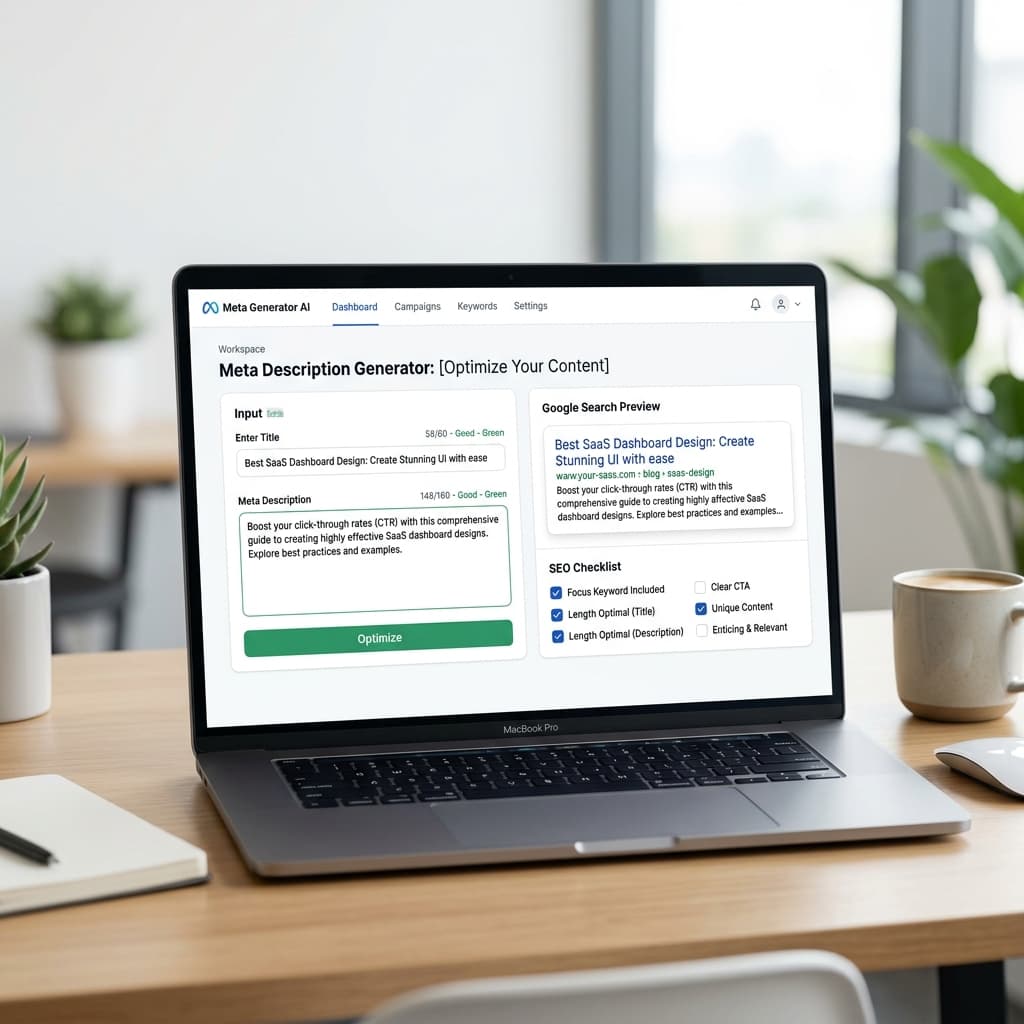
A Meta Description Generator is a tool that helps you write short SEO descriptions for web pages, blog posts, product pages, service pages, and tools. The meta description usually appears under the page title in search results, although Google may sometimes rewrite it depending on the search query.
A good meta description explains what the page is about and why someone should click. It does not directly guarantee ranking, but it can improve how your page appears in search results and help users understand your content faster.
For example, if your page is about a free AI Blog Title Generator, a weak meta description would be: "This is a blog title tool. Use it now."
A better version would be: "Use this free AI Blog Title Generator to create SEO-friendly blog titles for articles, guides, reviews, and list posts in seconds." The second description is better because it includes the focus keyword, explains the benefit, and tells users what they can do on the page.
Why Meta Descriptions Matter
Meta descriptions matter because they influence the way users judge your page before clicking. When someone searches on Google, they scan the title, URL, and description quickly. If your meta description is clear and useful, your result feels more relevant.
In my opinion, meta descriptions are often ignored by beginners because they do not feel as important as the article itself. But when you publish many pages, poor meta descriptions can reduce your overall search performance.
A good meta description helps with:
- Better search result appearance and layout structure
- Higher click-through rate (CTR) from search engines
- Clearer page positioning and search term alignment
- Better user expectations after clicking
- Stronger keyword relevance checks in Rank Math
How Our Meta Description Generator Works
The Realaiva Meta Description Generator is designed for practical SEO use, not just random text generation. It incorporates search intent models to produce descriptions that capture attention.
A strong version of this tool includes:
- Page topic input and Focus keyword input
- Page type selector (blog, landing page, product, tool)
- Tone selector (professional, convincing, educational)
- Character counter to keep output under 160 characters
- Live SERP preview for desktop and mobile layouts

Good meta descriptions explain the page benefit before users click.
The tool automatically verifies that the focus keyword is placed naturally and recommends the version that best matches search engine guidelines.
Who Should Use This Tool?
This Meta Description Generator is useful for:
- Bloggers who want to optimize their search result appearance
- SEO beginners learning on-page optimization basics
- E-commerce store owners optimizing product snippets
- SaaS founders launching landing pages and tools
- Content agencies writing metadata in bulk
For Realaiva, this tool is especially relevant because your audience is interested in AI tools, SEO tools, content writing, and digital products. A free Meta Description Generator attracts users who need fast SEO help, then guides them to your other content.
11 Ways to Write Better Meta Descriptions
Follow these eleven rules to write descriptions that earn clicks and satisfy search engines:
- Start With the Focus Keyword: Make sure the keyword appears naturally, preferably near the beginning.
- Keep It Short: Stay within the 150-160 character limit to prevent Google truncation.
- Explain the Page Benefit: Tell searchers what value or solution the page provides.
- Match Search Intent: If a user wants to generate something, use action-oriented descriptions.
- Use Action Words: Start with verbs like Create, Generate, Improve, or Learn.
- Avoid Keyword Stuffing: Do not repeat keywords. One good mention is enough.
- Mention the Target Audience: Address the specific user base (e.g. "for writers", "for store owners").
- Add a Specific Use Case: Highlight distinct features, like "includes live preview" or "free PDF download."
- Avoid Fake Guarantees: Do not make unrealistic claims that damage user trust.
- Write for Humans First: Ensure the text is readable, conversational, and engaging.
- Test Multiple Versions: Use the generator to create different options and select the most compelling snippet.
Meta Description Examples
Here are some examples of highly-optimized meta descriptions across different formats:
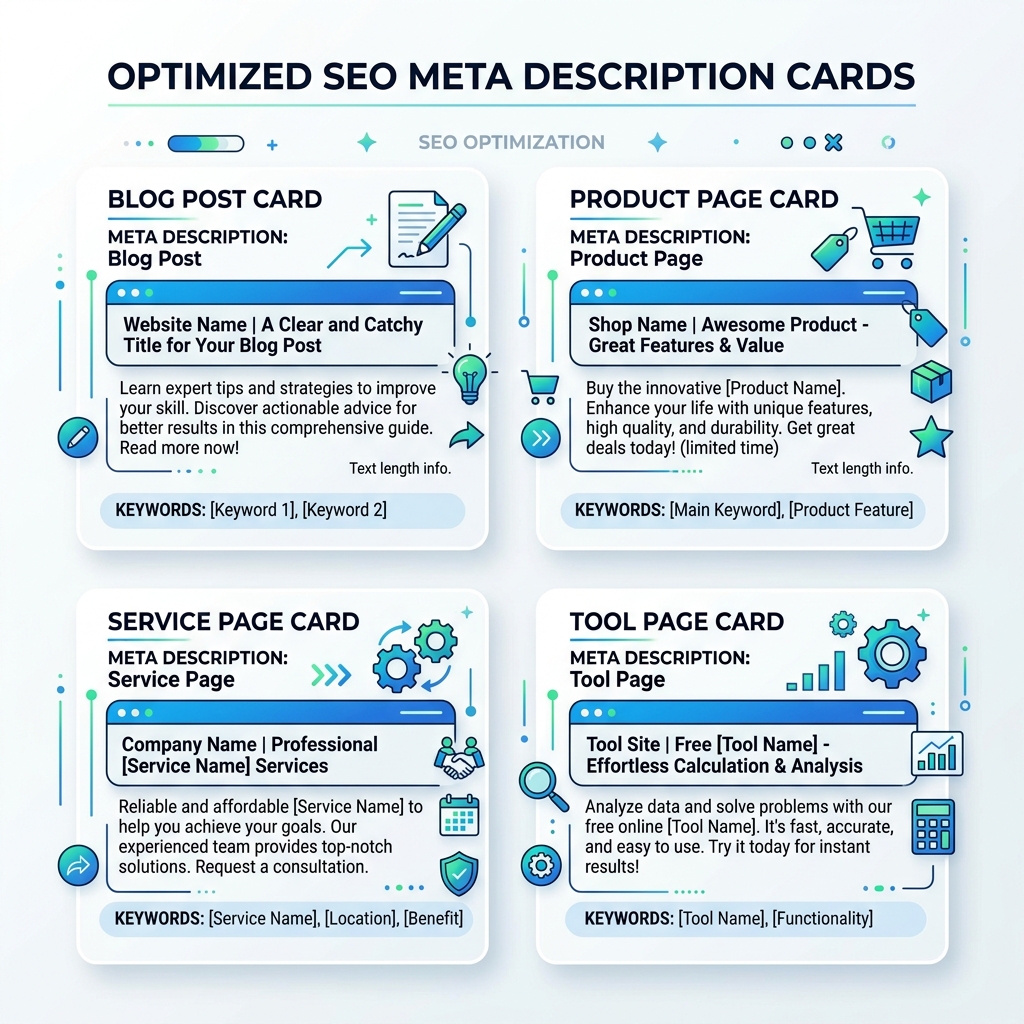
Meta descriptions should be short, specific, and written for real searchers.
- Blog Post: Discover the best AI tools for students in 2026, including writing, research, productivity, and study apps to save time and learn smarter.
- Tool Page: Use this free AI Blog Title Generator to create SEO-friendly titles for blog posts, guides, reviews, and list articles in seconds.
- Product Page: Get a clean digital planner template for goals, habits, budgeting, and daily productivity. Perfect for students, creators, and professionals.
- Service Page: Explore AI automation services for appointment booking, customer support, lead follow-up, and business workflow automation.
Common Mistakes
One common mistake is writing descriptions that are too generic, like: "We provide the best solution for your needs." This tells the searcher absolutely nothing.
Another mistake is leaving the meta description empty. When you do this, Google extracts text from the page automatically. While it sometimes works, it often creates disjointed snippets that lower your click-through rate.
Lastly, do not write purely to game SEO scores. Keep the reader in mind. If the description does not read naturally, users will skip it, regardless of keyword usage.
Final Verdict
A Meta Description Generator is one of the most useful tools in a blogger's or marketer's toolkit. By crafting custom snippets for every page, you stand out in the search results, build immediate trust, and maximize your organic click potential.
The best description answers a simple question: What is this page about, and why should I click?